
OUR STORY

Built from a simple belief: disability support should create more room for life.

Live Life Support was established around a person-centred idea: support should strengthen everyday possibility rather than make the service itself the centre of a participantu2019s life. We begin by understanding what matters to the person, then shape practical support around their choices, routines, relationships, communication and goals.

Registered NDIS ProviderBrisbane and surrounding communities
01 / 02

ABOUT THIS PAGE

The participantu2019s life is bigger than the service.

Disability support should strengthen everyday life rather than ask people to fit a rigid provider model. Our story is reflected in a continuing focus on participant choice, trusted relationships, clear communication, practical independence and meaningful participation in the places and routines that matter.

You are listened toYour views, communication preferences and priorities should influence what happens next.
Your direction stays visibleChoice is not a one-off intake question; it should remain part of everyday decisions and reviews.
Support fits real lifeThe arrangement should connect with the routines, relationships, places and goals that matter to you.
THE STORY IN FOUR PARTS

From belief to everyday practice.

Our story is less about a date on a timeline and more about the principles that continue to shape how support is approached.

01

Listen

Understand the person before defining the service: what matters, what is working, what feels difficult and what they want to strengthen or change.

02

Understand

Look at goals, routines, communication, relationships, environment and the practical circumstances that influence whether support will work in real life.

03

Shape

Turn that understanding into a clear, respectful support arrangement with visible choices, responsibilities and next steps.

04

Evolve

Keep learning through review, feedback and changing circumstances rather than treating the first arrangement as permanently fixed.

A respectful Live Life Support conversation. Practical disability support taking place in everyday life.
A supportive human moment focused on listening and connection.
EVERYDAY LIFE FIRST

Your life is bigger than the support you receive.

Disability support is important, but it should not become the centre of the personu2019s identity or everyday life. Participants are family members, friends, neighbours, students, employees, community members and individuals with their own interests, relationships and ambitions. Support is most useful when it creates more room for those parts of life.

  • 01Build confidence in everyday routines
  • 02Strengthen practical independence at a realistic pace
  • 03Participate in chosen community life and relationships
  • 04Make informed decisions about support and next steps
WHAT THIS MEANS FOR YOU

A person-centred story should change what you experience.

The belief only matters if it is visible in ordinary conversations, decisions and follow-through.

You are listened to

Your views, communication preferences and priorities should influence what happens next.

You know what to expect

Support, responsibilities and next steps should be explained clearly enough to understand.

You can request change

If an arrangement is not working, there should be a practical way to discuss what needs to be different.

Your goals stay visible

Support should remain connected to what you want to maintain, develop, explore or change.

WHAT HAS NOT CHANGED
The best support should make the person more visibleu2014not the provider.

Professional systems matter, but the service should never become more important than the participantu2019s own life, direction and relationships.

01

Choice

Keep decisions close to the participant and make room for questions before agreement.

02

Confidence

Look for opportunities to strengthen capability rather than taking over unnecessarily.

03

Belonging

Keep meaningful people, routines, interests and places connected to the support conversation.

SUPPORT IN REAL LIFE

Support should work where everyday life actually happens.

Plans and service agreements matter, but support ultimately has to make sense in real routines. The same support category can look very different from one participant to another because goals, environments, communication and preferences are different.

  • Getting ready for the day with the right level of assistance
  • Attending an appointment with clearer planning and communication
  • Practising a household routine rather than having it automatically taken over
  • Joining a chosen activity or reconnecting with community
  • Trying something new at a pace that feels achievable
  • Adjusting the arrangement when circumstances or goals change
Practical disability support taking place in everyday life.
CHOICE STAYS VISIBLE

Choice and control should continue after support begins.

Choice is not a single question at intake. It should remain visible in everyday decisions and when circumstances change.

01

Ask questions

Request clarification before agreeing to something you do not understand.

02

Request changes

Discuss timing, communication, worker fit or other practical arrangements when something is not working.

03

Involve someone you trust

With consent, a family member, nominee, advocate or other trusted person can be part of the conversation.

04

Speak up about a concern

Feedback, complaints and safeguarding concerns should have visible pathways and be taken seriously.

RELATIONSHIPS ARE PART OF QUALITY

The person who shows up matters as much as the written plan.

Skills and procedures are essential, but participants should also experience reliability, respectful communication, professional boundaries and practical fit in the working relationship.

Registered NDIS Provider
01

Reliable

Show up prepared, understand the agreed role and communicate when something changes.

02

Respectful

Protect dignity, privacy, preferences and the participantu2019s right to make decisions.

03

Clear communicators

Listen carefully, explain what is happening and adapt communication where reasonably possible.

Participant fitpreferences matter
Boundariesstay professional
Reviewkeeps support responsive
ORGANISED WITHOUT FEELING IMPERSONAL

Warm support still needs clear professional structure.

Person-centred support does not mean informal or unclear support. Good systems should make the experience safer and easier to navigate while keeping the person visible behind every plan, schedule and process.

  • Privacy and consent remain visible
  • Responsibilities and professional boundaries are clear
  • Safeguarding and immediate-risk pathways are understood
  • Feedback, complaints and concerns have a place to go
  • Important decisions and changes are communicated clearly
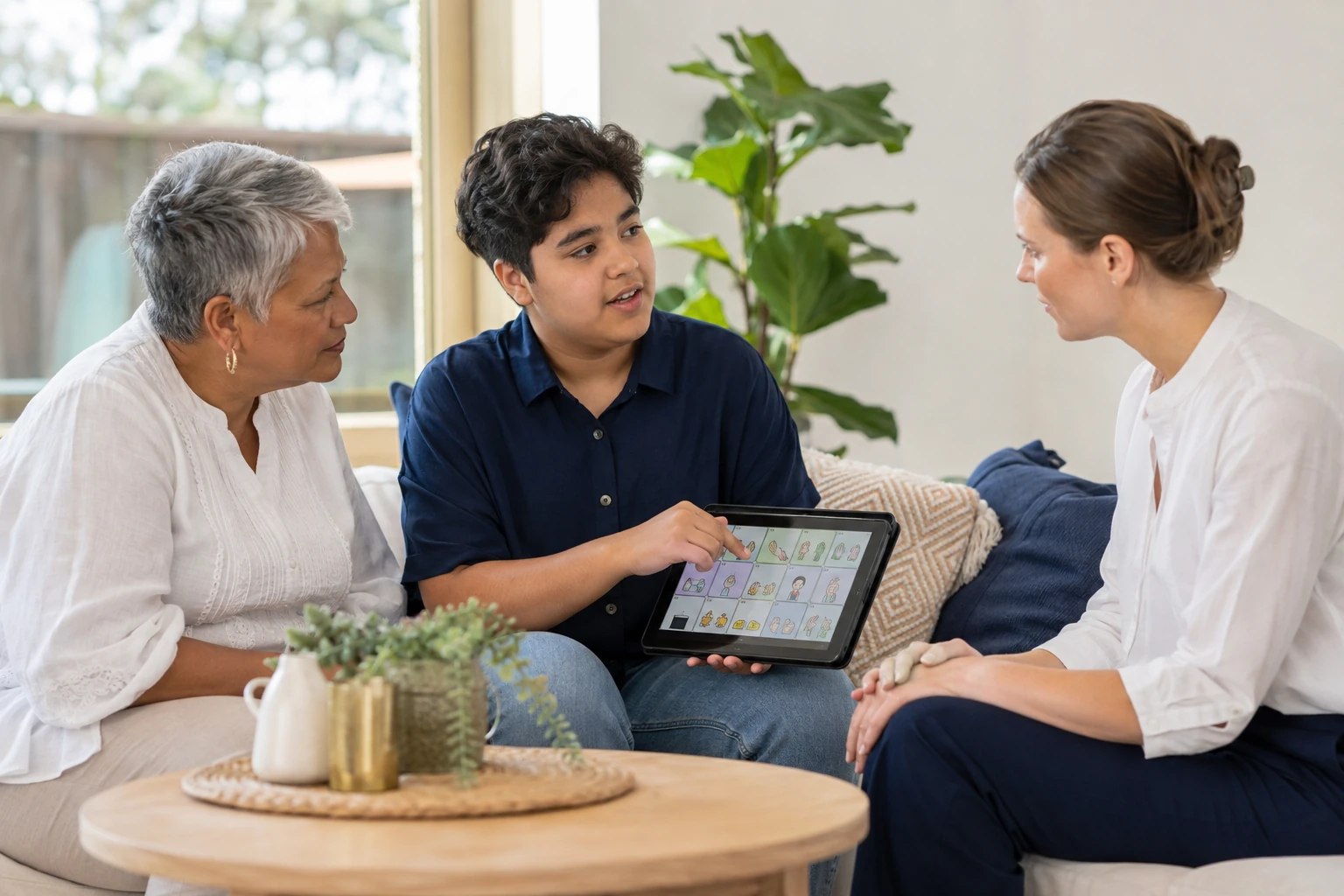
Accessible communication during a participant-centred support conversation.
WHEN LIFE CHANGES

A good support arrangement should not become rigid.

Goals, confidence, funding, home life, schedules and circumstances can change. Review keeps the support connected to the person rather than to an old arrangement.

01

Notice what changed

Identify a new goal, challenge, routine, environment or practical need.

02

Talk about what is working

Keep the useful parts of the arrangement visible instead of starting from assumptions.

03

Clarify what needs to change

Review communication, timing, worker fit, responsibilities or other practical details.

04

Agree the next workable step

Make the updated arrangement understandable and keep room for further review.

OUR STORY CONTINUES
Listening does not end at intake.

Live Life Support continues to grow through participant experiences, feedback, changing needs and the everyday work of making support more understandable, respectful and useful.

01

Feedback

Compliments and suggestions help identify what should continue and what could improve.

02

Speaking up

Concerns and complaints should have a clear pathway without treating someone unfairly for raising them.

03

Learning

Review and reflection help keep systems connected to real participant experience.

EXPLORE WHAT SHAPES OUR WORK

Continue from the story into our values, approach and quality systems.

These pages explain how the principles behind Live Life Support are intended to show up in planning, people, safeguarding and everyday support.

Mission & Values

Our mission and values guide how Live Life Support communicates, plans and delivers NDIS supports. They are designed to keep participant choice and control, dignity, human rights, practical independence and meaningful community connection visible in ordinary decisionsu2014not only in policy statements.

Explore

Our Approach

Good NDIS support starts by understanding the person before defining the service. We consider goals, routines, communication, environment, preferred involvement of family or other trusted people, and practical scheduling so the support arrangement can be clear, respectful and workable in real life.

Explore

Quality & Safeguarding

Quality and safeguarding should be visible in everyday service delivery. Live Life Support aims to protect dignity, privacy, informed choice and safe practice while making it clear how participants can ask questions, give feedback, make a complaint or raise a concern when something does not feel right.

Explore